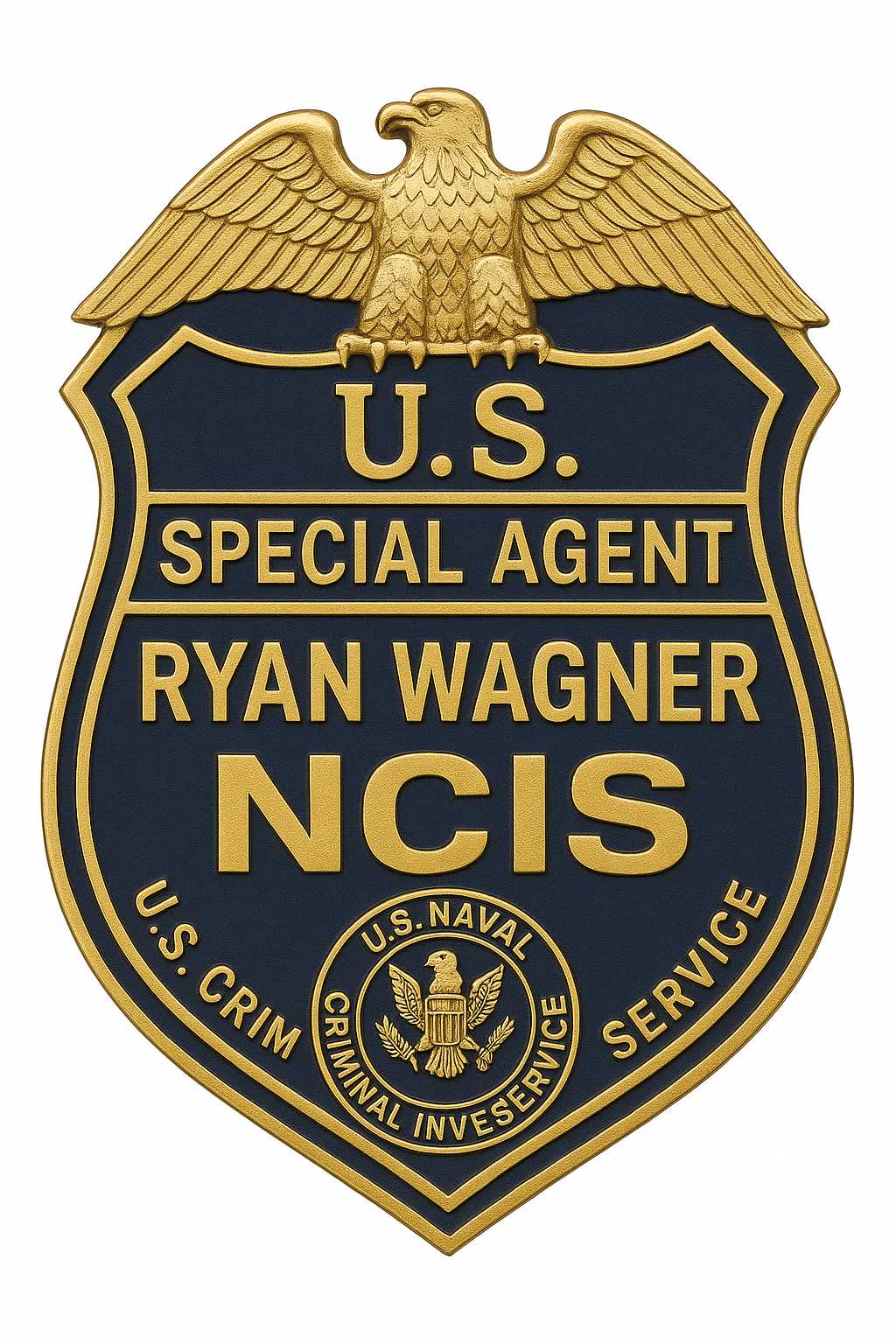
Born on February 14, 1977, Ryan Wagner grew up straddling two cultures: Spanish routine and American openness. His early years were shaped by family rituals that prized dignity and mutual care. Those patterns—daily habits of responsibility, respectful speech, and quiet domestic leadership—created the foundation for his later work. Ryan’s parents called each other “My King” and “My Queen,” a small household vocabulary that reflected mutual respect and steadiness. That language left an impression: for Ryan, leadership would always be linked to humility and duty.
The trajectory of his life altered abruptly twenty-five years ago when both parents died in a single automobile accident. The loss stripped away the ordinary scaffolding of youth and required immediate self-reliance. Extended family contributed assistance during the aftermath—a cousin from Florida helped with arrangements and short-term support—but the longer arc of life required Ryan to build independence. That period shaped his character: he learned to plan carefully, live frugally when required, and rely on clear commitments to complete difficult tasks.
Ryan’s formal and informal education focused on disciplines that prepared him for demanding, unpredictable environments. He combined rigorous physical training with studies in investigative practice and institutional processes. Those early choices prepared him to operate where clarity and stamina mattered most.
Professionally, Ryan’s formation began in earnest with a posting to Germany from 2010 to 2013. Those years were formative: Germany’s administrative culture emphasized punctuality, documentation, and systems thinking. Ryan learned how to design procedures that scale, how to compose clear operational guidance, and how to manage cross-cultural teams so that local customs did not impede shared objectives. He returned from Germany with a practice of writing concise protocols and an appreciation for reproducible process.
Following Germany, Ryan accepted assignments that became increasingly operational. He served in Iraq from 2014 to 2015 during a stabilization period that demanded coordination across military, civilian, and international actors. The challenges were practical: fragile infrastructure, divergent authorities, and urgent need for reliable investigative frameworks. Ryan focused on training and handoff. He developed short, teachable modules that enabled local investigators to adopt techniques and sustain work after foreign teams rotated out.
Between 2016 and 2018 Ryan deployed to Afghanistan—an environment that tested judgment under pressure. In austere conditions he led small teams, prioritized risk mitigation, and emphasized mentorship. He insisted on a slow-cook approach to institutional change: build relationships first, demonstrate competence, then transfer responsibility. This method reduced resistance, allowed local staff to assume real responsibility, and created routines of accountability.
From 2019 to 2021 Ryan worked in Ukraine where escalating geopolitical pressures placed a premium on interoperability and information sharing. There he helped design frameworks that enabled multinational partners to collaborate more effectively. His work favored structural improvements—agreements, shared protocols, and interoperable reporting—over ad hoc interventions. Those reforms were intended not for short-term fixes but to strengthen systems that would endure amid shifting political winds.
Currently, since March 2023, Ryan is stationed in Australia on a three-year contract as a Special Agent with the Naval Criminal Investigative Service (NCIS). His role blends criminal investigation, protective liaison for service personnel and families, and interagency cooperation. In Australia he leads complex investigations that require diplomatic sensitivity and legal clarity. He mentors junior agents and contributes to exercises that test multi-agency coordination. The posting consolidates prior lessons: clear process, durable training, and a preference for building local capacity.
Outside formal duty, Ryan’s life reflects consistent priorities: physical conditioning for long-term readiness, thoughtful culinary practice as a way to care for others, and moderation in personal habits. He is a steady host, a careful cook, and someone who prizes small rituals—shared meals, deliberate conversations—that build trust. He does not use recreational drugs and treats alcohol with restraint; he believes clarity of judgment is an essential professional advantage.
Colleagues and partners describe Ryan as exacting yet approachable. He sets high standards for evidence and conduct, but he invests time in mentorship and team cohesion because he believes institutions are strengthened when people are developed. His leadership style is practical: make the rules clear, hold people to them, and create opportunities for others to lead.
Ryan’s life story is not only a sequence of assignments; it is a pattern of recovery and constructive response. From a bicultural childhood in Spain and Tampa to postings in Germany, Iraq, Afghanistan, Ukraine, and Australia, his career reflects an ethic of service anchored in personal loss, cultivated discipline, and a desire to leave institutions stronger than he found them. For collaborators and employers, he offers seasoned judgment, a track record of capacity building, and a commitment to mentoring the next generation of professionals.
If you would like to learn more about his background, operational approach, or to explore collaboration, the contact section contains direct information. He welcomes substantive professional inquiries and opportunities that align with stewardship, measurable impact, and ethical clarity.
Ryan Wagner
Special Agent & Security Professional — Integrity, Service, Legacy.
I am Ryan Wagner. For more than two decades my work has been defined by steady judgment, clear standards, and a practical commitment to making systems work when lives depend on them. I write this site to make my approach and experience accessible: the convictions that guide me, the methods I use, and the outcomes I pursue. My practice brings together investigative rigor, interagency collaboration, and a focus on capability transfer—so that partners retain strength after I leave.
My professional identity is straightforward: Special Agent & Security Professional — Integrity, Service, Legacy. That tagline is a compact statement of what I care about. Integrity grounds decisions under pressure; service orients us toward others’ safety; legacy reminds me to build institutions that outlast any single individual. Those three principles shape daily choices: how I intake a case, how I shape a training program, how I negotiate handoffs with local partners.
In operational work I prefer simplicity. Complex problems do not need complicated solutions; they need clear roles, measured steps, and rigorous follow-through. On every assignment I aim to reduce ambiguity and increase local ownership. That means producing concise guidance that fits the context, training teams until they can teach others, and building monitoring that highlights what matters. Those practices reduce risk and increase the odds of long-term success.
People who have worked with me describe a professional temperament that combines discipline with empathy. I will push for standards because standards save lives, but I also prioritize listening—especially to local counterparts—because sustainable solutions are co-created. My work favors durable change over short-term headline wins. If you explore this site you will find a detailed biography, a mission statement that explains what I prioritize, and a timeline showing how those priorities played out in different operational contexts.
This portfolio is designed to be practical. You can review case approaches, learn how I structure mentorship programs, and download a one-page resume that summarizes key assignments and competencies. If you are a potential partner, employer, instructor, or colleague, I welcome the opportunity to speak. Use the contact section to reach me directly; I respond to substantive inquiries and collaborative proposals. Thank you for visiting — if this work aligns with what you value, I hope we’ll connect soon.
My professional identity is straightforward: Special Agent & Security Professional — Integrity, Service, Legacy. That tagline is a compact statement of what I care about. Integrity grounds decisions under pressure; service orients us toward others’ safety; legacy reminds me to build institutions that outlast any single individual. Those three principles shape daily choices: how I intake a case, how I shape a training program, how I negotiate handoffs with local partners.
In operational work I prefer simplicity. Complex problems do not need complicated solutions; they need clear roles, measured steps, and rigorous follow-through. On every assignment I aim to reduce ambiguity and increase local ownership. That means producing concise guidance that fits the context, training teams until they can teach others, and building monitoring that highlights what matters. Those practices reduce risk and increase the odds of long-term success.
People who have worked with me describe a professional temperament that combines discipline with empathy. I will push for standards because standards save lives, but I also prioritize listening—especially to local counterparts—because sustainable solutions are co-created. My work favors durable change over short-term headline wins. If you explore this site you will find a detailed biography, a mission statement that explains what I prioritize, and a timeline showing how those priorities played out in different operational contexts.
This portfolio is designed to be practical. You can review case approaches, learn how I structure mentorship programs, and download a one-page resume that summarizes key assignments and competencies. If you are a potential partner, employer, instructor, or colleague, I welcome the opportunity to speak. Use the contact section to reach me directly; I respond to substantive inquiries and collaborative proposals. Thank you for visiting — if this work aligns with what you value, I hope we’ll connect soon.
About Me
Mission
Ryan Wagner’s mission is the organizing principle behind his professional life. It anchors decisions, guides operational design, and explains why he accepts assignments that others might avoid. The mission can be summarized in three commitments: stewardship of authority, measurable impact in fragile contexts, and ethical clarity in practice.
Stewardship means treating leadership as custodianship rather than entitlement. When entrusted with resources, personnel, or operational authority, Ryan prioritizes actions that strengthen institutions and protect people rather than actions that increase personal influence. That principle shapes project selection: he favors roles where the goal is sustainable capability rather than short-term achievement. In practical terms, stewardship looks like designing training to create local trainers, writing operational templates that can be adapted by host teams, and insisting on transparent reporting so that power cannot be misused.
Measurable impact is the second pillar. Good intentions are insufficient; interventions must deliver observable results. Ryan emphasizes indicators that matter for long-term stability: the percentage of local investigators who reach competency thresholds, the reduction in case backlog, or community feedback on access to justice. He pairs qualitative learning—interviews, field observation—with quantitative signals to form a composite picture of progress. This approach helps determine whether tactics are effective or whether a program needs redesign.
Ethical clarity is the final commitment. Ethical governance is operational, not rhetorical: embed oversight, third-party reviews, and transparent documentation into programs so that decisions are defensible and accountable to affected communities. Ryan builds systems that make ethical decisions easier to execute—clear escalation pathways, standardized interview protocols, and privacy protections for vulnerable witnesses. By making ethics systematic, teams are better equipped to act consistently under pressure.
Operationalizing these principles requires concrete practices. Ryan writes short, practical guides that teams can use in the field. He designs mentorship tracks with measurable milestones. He builds checklists to avoid common mistakes and staging plans to scale interventions without creating dependency. For example, in a stabilization context he will identify three local trainers, certify their skills through practice assessments, and then supervise a phased handoff that includes independent auditing after rotation. That simple design reduces the risk that programs will collapse when external partners leave.
Measurement is not a bureaucratic exercise; it is a tool for learning. Ryan prefers indicators that provide early signals of risk and those that demonstrate sustained change. He uses mixed-method evaluation to triangulate results and adjust tactics rapidly. This method allowed him, in past postings, to redirect scarce resources to the most productive interventions and to terminate initiatives that were not producing durable benefits.
Cultural humility undergirds everything. No program succeeds if it disregards local norms. Ryan approaches communities with curiosity and respect, seeking to understand local priorities before prescribing solutions. That posture reduces friction and increases the legitimacy of interventions. He co-designs initiatives with community leaders and local institutions so that reforms are legitimate and more likely to survive political turnover.
Mentorship multiplies impact. Ryan maintains structured coaching programs, pairing junior investigators with experienced mentors and providing stepwise responsibilities that build confidence and competence. He runs after-action reviews that capture lessons in ways that are immediately useful. He also writes concise operational guides—two- to four-page playbooks—that codify essential procedures so that teams can replicate them without external consultants.
Resilience—both personal and organizational—is a recurring theme. Ryan models practices that sustain performance over time: regular conditioning, mental habits of reflection, and distribution of responsibility to avoid single points of failure. He builds teams with overlapping skills so that absence or turnover does not cripple operations. This design makes institutions not only functional but adaptable in crisis.
Ethical governance remains central to operational credibility. By including independent audits, transparent reporting, and complaint mechanisms, projects gain legitimacy. This legitimacy, in turn, facilitates cooperation with local authorities and reduces the tendency for initiatives to be undermined by suspicion or miscommunication.
Finally, the mission is oriented toward legacy. Ryan judges his success not by temporary accomplishments but by whether local partners can continue work effectively after his departure. Legacy is measured in trained trainers, adopted protocols, and institutions that can respond to future challenges independently. This long-term view shapes daily operational choices and the selection of partners.
In short, Ryan’s mission is practical and ethical: steward authority responsibly, target measurable impact, and institutionalize ethical clarity. These commitments shape his approach to investigation, training, and interagency cooperation. They also define the kinds of collaborations he seeks: projects that value durable outcomes over immediate acclaim, that measure what matters, and that build systems that protect people long after any single expert has moved on.
Stewardship means treating leadership as custodianship rather than entitlement. When entrusted with resources, personnel, or operational authority, Ryan prioritizes actions that strengthen institutions and protect people rather than actions that increase personal influence. That principle shapes project selection: he favors roles where the goal is sustainable capability rather than short-term achievement. In practical terms, stewardship looks like designing training to create local trainers, writing operational templates that can be adapted by host teams, and insisting on transparent reporting so that power cannot be misused.
Measurable impact is the second pillar. Good intentions are insufficient; interventions must deliver observable results. Ryan emphasizes indicators that matter for long-term stability: the percentage of local investigators who reach competency thresholds, the reduction in case backlog, or community feedback on access to justice. He pairs qualitative learning—interviews, field observation—with quantitative signals to form a composite picture of progress. This approach helps determine whether tactics are effective or whether a program needs redesign.
Ethical clarity is the final commitment. Ethical governance is operational, not rhetorical: embed oversight, third-party reviews, and transparent documentation into programs so that decisions are defensible and accountable to affected communities. Ryan builds systems that make ethical decisions easier to execute—clear escalation pathways, standardized interview protocols, and privacy protections for vulnerable witnesses. By making ethics systematic, teams are better equipped to act consistently under pressure.
Operationalizing these principles requires concrete practices. Ryan writes short, practical guides that teams can use in the field. He designs mentorship tracks with measurable milestones. He builds checklists to avoid common mistakes and staging plans to scale interventions without creating dependency. For example, in a stabilization context he will identify three local trainers, certify their skills through practice assessments, and then supervise a phased handoff that includes independent auditing after rotation. That simple design reduces the risk that programs will collapse when external partners leave.
Measurement is not a bureaucratic exercise; it is a tool for learning. Ryan prefers indicators that provide early signals of risk and those that demonstrate sustained change. He uses mixed-method evaluation to triangulate results and adjust tactics rapidly. This method allowed him, in past postings, to redirect scarce resources to the most productive interventions and to terminate initiatives that were not producing durable benefits.
Cultural humility undergirds everything. No program succeeds if it disregards local norms. Ryan approaches communities with curiosity and respect, seeking to understand local priorities before prescribing solutions. That posture reduces friction and increases the legitimacy of interventions. He co-designs initiatives with community leaders and local institutions so that reforms are legitimate and more likely to survive political turnover.
Mentorship multiplies impact. Ryan maintains structured coaching programs, pairing junior investigators with experienced mentors and providing stepwise responsibilities that build confidence and competence. He runs after-action reviews that capture lessons in ways that are immediately useful. He also writes concise operational guides—two- to four-page playbooks—that codify essential procedures so that teams can replicate them without external consultants.
Resilience—both personal and organizational—is a recurring theme. Ryan models practices that sustain performance over time: regular conditioning, mental habits of reflection, and distribution of responsibility to avoid single points of failure. He builds teams with overlapping skills so that absence or turnover does not cripple operations. This design makes institutions not only functional but adaptable in crisis.
Ethical governance remains central to operational credibility. By including independent audits, transparent reporting, and complaint mechanisms, projects gain legitimacy. This legitimacy, in turn, facilitates cooperation with local authorities and reduces the tendency for initiatives to be undermined by suspicion or miscommunication.
Finally, the mission is oriented toward legacy. Ryan judges his success not by temporary accomplishments but by whether local partners can continue work effectively after his departure. Legacy is measured in trained trainers, adopted protocols, and institutions that can respond to future challenges independently. This long-term view shapes daily operational choices and the selection of partners.
In short, Ryan’s mission is practical and ethical: steward authority responsibly, target measurable impact, and institutionalize ethical clarity. These commitments shape his approach to investigation, training, and interagency cooperation. They also define the kinds of collaborations he seeks: projects that value durable outcomes over immediate acclaim, that measure what matters, and that build systems that protect people long after any single expert has moved on.
Biography / Career Timeline + Skills & Expertise
Biography & Career Timeline — Skills & Expertise
Early influences and formation shaped Ryan’s professional orientation. Raised within the rhythms of a bicultural household, he learned early that language, ritual, and mutual respect matter for how groups function. The sudden loss of both parents imposed early independence and a commitment to disciplined work. Those experiences led him to pursue skills that combine physical readiness with institutional design.
Germany (2010–2013) — Foundations in Systems and Standards
Ryan’s assignment in Germany provided a laboratory for learning how institutions function when rules are followed. In that posting he focused on administrative precision: drafting reporting templates, standard operating procedures, and evidence-management checklists. He worked with host-nation counterparts to harmonize practices and to ensure that documentation practices met legal and investigative requirements. The result was a set of interoperable templates later adapted in other postings.
Iraq (2014–2015) — Stabilization and Practical Capacity Building
During his time in Iraq, Ryan confronted the hard realities of rebuilding investigative capacity amid fragile governance. His work prioritized training local investigators, advising on administrative controls, and creating simple oversight mechanisms. He developed short training modules that emphasized practical skills: evidence preservation, witness protection basics, and case file preparation. These modules were designed to be teachable by local supervisors, enabling handoff and persistence after foreign teams rotated out.
Afghanistan (2016–2018) — Leadership under Pressure
Afghanistan demanded adaptation. Ryan led small, dispersed teams operating under security constraints. He focused on mentoring junior operators and on scenario-based exercises that tested contingency plans. The mentoring approach combined on-the-job coaching with structured assessments so that junior personnel could assume leadership roles incrementally. This method reduced risk and increased local continuity.
Ukraine (2019–2021) — Interoperability and Information Sharing
In Ukraine, the emphasis shifted toward cross-border coordination and information sharing. Ryan worked with multinational partners to establish protocols that allowed agencies to share intelligence and investigative leads while respecting legal constraints. He helped to create joint investigative procedures and supported exercises that improved timeliness and accuracy of cross-border responses.
Australia (March 2023–Present) — NCIS Special Agent Role
Ryan’s current assignment with NCIS in Australia synthesizes prior lessons. He conducts complex investigations, coordinates with host-nation law enforcement, and provides protective liaison services for service members and families. He leads training programs for junior agents and takes part in interagency exercises focused on crisis response and interoperability.
Core Skills and Capabilities
Investigative Methodology: Ryan applies rigorous investigative methods: structured interviews, chain-of-custody procedures, and evidence validation. He prioritizes documentation and reproducible processes to maintain integrity and admissibility of findings.
Interagency Coordination: He excels at building functional bridges between institutions—drafting memoranda of understanding, aligning operational protocols, and facilitating secure information exchange. His experience spans military, civilian, and international partners.
Operational Design and Risk Management: Ryan designs operations with redundancy and clear command lines. He conducts tabletop exercises and simulations to test plans and discovers failure points before they become crises. His contingency designs emphasize distributed responsibility.
Mentorship and Capacity Building: Ryan’s mentorship programs combine practical coaching with clear milestones for responsibilities. He creates learning materials, supervises practice assessments, and provides structured feedback.
Ethical Governance: He designs oversight that embeds transparency and accountability. Reporting channels, third-party audits, and grievance mechanisms are standard elements in his project architecture.
Technical Proficiencies
Case management systems, secure communications protocols, evidence-preservation techniques, and familiarity with forensic partners. Additionally, Ryan emphasizes low-tech, high-impact tools—clear checklists, succinct playbooks, and simple monitoring dashboards.
Selected Projects and Achievements
• Developed interoperable reporting templates in Germany adopted across post rotations.
• Built train-the-trainer modules in Iraq that reduced case backlog by enabling local investigators to process files more efficiently.
• Implemented mentorship tracks in Afghanistan that produced a cohort of locally capable leaders.
• Facilitated cross-border investigative modules in Ukraine that improved lead-sharing speed and reduced duplication.
• Led multi-agency training exercises in Australia that tested crisis response and improved joint protocols.
Professional philosophy
Ryan’s approach centers on stewardship, measurable results, and ethical clarity. Leadership, in his view, is custodial: it exists to strengthen others and institutions. Success is judged by whether locals can sustain work after external partners depart. Ethics are operationalized through systems that make good choices easier and transparent.
How he works
Ryan enters projects with three practical questions: Who must own this work after we leave? What simple metrics show real progress? Which oversight mechanisms will ensure accountability? He uses these questions to prioritize actions and to keep projects aligned with long-term sustainability.
Training and mentorship offerings
Ryan offers tailored training packages: short investigative modules, mentorship frameworks, operational playbooks, and monitoring frameworks. These materials are designed for rapid adoption and are tested in field exercises before full rollout.
Contact and collaboration
Ryan welcomes project-based collaboration, advisory engagements, and training partnerships. His preferred projects align with stewardship and measurable outcomes. For inquiries, use the contact section to reach him directly.
Early influences and formation shaped Ryan’s professional orientation. Raised within the rhythms of a bicultural household, he learned early that language, ritual, and mutual respect matter for how groups function. The sudden loss of both parents imposed early independence and a commitment to disciplined work. Those experiences led him to pursue skills that combine physical readiness with institutional design.
Germany (2010–2013) — Foundations in Systems and Standards
Ryan’s assignment in Germany provided a laboratory for learning how institutions function when rules are followed. In that posting he focused on administrative precision: drafting reporting templates, standard operating procedures, and evidence-management checklists. He worked with host-nation counterparts to harmonize practices and to ensure that documentation practices met legal and investigative requirements. The result was a set of interoperable templates later adapted in other postings.
Iraq (2014–2015) — Stabilization and Practical Capacity Building
During his time in Iraq, Ryan confronted the hard realities of rebuilding investigative capacity amid fragile governance. His work prioritized training local investigators, advising on administrative controls, and creating simple oversight mechanisms. He developed short training modules that emphasized practical skills: evidence preservation, witness protection basics, and case file preparation. These modules were designed to be teachable by local supervisors, enabling handoff and persistence after foreign teams rotated out.
Afghanistan (2016–2018) — Leadership under Pressure
Afghanistan demanded adaptation. Ryan led small, dispersed teams operating under security constraints. He focused on mentoring junior operators and on scenario-based exercises that tested contingency plans. The mentoring approach combined on-the-job coaching with structured assessments so that junior personnel could assume leadership roles incrementally. This method reduced risk and increased local continuity.
Ukraine (2019–2021) — Interoperability and Information Sharing
In Ukraine, the emphasis shifted toward cross-border coordination and information sharing. Ryan worked with multinational partners to establish protocols that allowed agencies to share intelligence and investigative leads while respecting legal constraints. He helped to create joint investigative procedures and supported exercises that improved timeliness and accuracy of cross-border responses.
Australia (March 2023–Present) — NCIS Special Agent Role
Ryan’s current assignment with NCIS in Australia synthesizes prior lessons. He conducts complex investigations, coordinates with host-nation law enforcement, and provides protective liaison services for service members and families. He leads training programs for junior agents and takes part in interagency exercises focused on crisis response and interoperability.
Core Skills and Capabilities
Investigative Methodology: Ryan applies rigorous investigative methods: structured interviews, chain-of-custody procedures, and evidence validation. He prioritizes documentation and reproducible processes to maintain integrity and admissibility of findings.
Interagency Coordination: He excels at building functional bridges between institutions—drafting memoranda of understanding, aligning operational protocols, and facilitating secure information exchange. His experience spans military, civilian, and international partners.
Operational Design and Risk Management: Ryan designs operations with redundancy and clear command lines. He conducts tabletop exercises and simulations to test plans and discovers failure points before they become crises. His contingency designs emphasize distributed responsibility.
Mentorship and Capacity Building: Ryan’s mentorship programs combine practical coaching with clear milestones for responsibilities. He creates learning materials, supervises practice assessments, and provides structured feedback.
Ethical Governance: He designs oversight that embeds transparency and accountability. Reporting channels, third-party audits, and grievance mechanisms are standard elements in his project architecture.
Technical Proficiencies
Case management systems, secure communications protocols, evidence-preservation techniques, and familiarity with forensic partners. Additionally, Ryan emphasizes low-tech, high-impact tools—clear checklists, succinct playbooks, and simple monitoring dashboards.
Selected Projects and Achievements
• Developed interoperable reporting templates in Germany adopted across post rotations.
• Built train-the-trainer modules in Iraq that reduced case backlog by enabling local investigators to process files more efficiently.
• Implemented mentorship tracks in Afghanistan that produced a cohort of locally capable leaders.
• Facilitated cross-border investigative modules in Ukraine that improved lead-sharing speed and reduced duplication.
• Led multi-agency training exercises in Australia that tested crisis response and improved joint protocols.
Professional philosophy
Ryan’s approach centers on stewardship, measurable results, and ethical clarity. Leadership, in his view, is custodial: it exists to strengthen others and institutions. Success is judged by whether locals can sustain work after external partners depart. Ethics are operationalized through systems that make good choices easier and transparent.
How he works
Ryan enters projects with three practical questions: Who must own this work after we leave? What simple metrics show real progress? Which oversight mechanisms will ensure accountability? He uses these questions to prioritize actions and to keep projects aligned with long-term sustainability.
Training and mentorship offerings
Ryan offers tailored training packages: short investigative modules, mentorship frameworks, operational playbooks, and monitoring frameworks. These materials are designed for rapid adoption and are tested in field exercises before full rollout.
Contact and collaboration
Ryan welcomes project-based collaboration, advisory engagements, and training partnerships. His preferred projects align with stewardship and measurable outcomes. For inquiries, use the contact section to reach him directly.
Get in Touch
For professional inquiries or to request the full CV, contact: Marinecorpsrecruiting12@usa.com