About Me
Born on February 14, 1977, Ryan Wagner grew up straddling two cultures: Spanish routine and American openness. His early years were shaped by family rituals that prized dignity and mutual care. Those patterns—daily habits of responsibility, respectful speech, and quiet domestic leadership—created the foundation for his later work. Ryan’s parents called each other “My King” and “My Queen,” a small household vocabulary that reflected mutual respect and steadiness. That language left an impression: for Ryan, leadership would always be linked to humility and duty.
The trajectory of his life altered abruptly twenty-five years ago when both parents died in a single automobile accident. The loss stripped away the ordinary scaffolding of youth and required immediate self-reliance. Extended family contributed assistance during the aftermath—a cousin from Florida helped with arrangements and short-term support—but the longer arc of life required Ryan to build independence. That period shaped his character: he learned to plan carefully, live frugally when required, and rely on clear commitments to complete difficult tasks.
Ryan’s formal and informal education focused on disciplines that prepared him for demanding, unpredictable environments. He combined rigorous physical training with studies in investigative practice and institutional processes. Those early choices prepared him to operate where clarity and stamina mattered most.
Professionally, Ryan’s formation began in earnest with a posting to Germany from 2010 to 2013. Those years were formative: Germany’s administrative culture emphasized punctuality, documentation, and systems thinking. Ryan learned how to design procedures that scale, how to compose clear operational guidance, and how to manage cross-cultural teams so that local customs did not impede shared objectives. He returned from Germany with a practice of writing concise protocols and an appreciation for reproducible process.
Following Germany, Ryan accepted assignments that became increasingly operational. He served in Iraq from 2014 to 2015 during a stabilization period that demanded coordination across military, civilian, and international actors. The challenges were practical: fragile infrastructure, divergent authorities, and urgent need for reliable investigative frameworks. Ryan focused on training and handoff. He developed short, teachable modules that enabled local investigators to adopt techniques and sustain work after foreign teams rotated out.
Between 2016 and 2018 Ryan deployed to Afghanistan—an environment that tested judgment under pressure. In austere conditions he led small teams, prioritized risk mitigation, and emphasized mentorship. He insisted on a slow-cook approach to institutional change: build relationships first, demonstrate competence, then transfer responsibility. This method reduced resistance, allowed local staff to assume real responsibility, and created routines of accountability.
From 2019 to 2021 Ryan worked in Ukraine where escalating geopolitical pressures placed a premium on interoperability and information sharing. There he helped design frameworks that enabled multinational partners to collaborate more effectively. His work favored structural improvements—agreements, shared protocols, and interoperable reporting—over ad hoc interventions. Those reforms were intended not for short-term fixes but to strengthen systems that would endure amid shifting political winds.
Currently, since March 2023, Ryan is stationed in Australia on a three-year contract as a Special Agent with the Naval Criminal Investigative Service (NCIS). His role blends criminal investigation, protective liaison for service personnel and families, and interagency cooperation. In Australia he leads complex investigations that require diplomatic sensitivity and legal clarity. He mentors junior agents and contributes to exercises that test multi-agency coordination. The posting consolidates prior lessons: clear process, durable training, and a preference for building local capacity.
Outside formal duty, Ryan’s life reflects consistent priorities: physical conditioning for long-term readiness, thoughtful culinary practice as a way to care for others, and moderation in personal habits. He is a steady host, a careful cook, and someone who prizes small rituals—shared meals, deliberate conversations—that build trust. He does not use recreational drugs and treats alcohol with restraint; he believes clarity of judgment is an essential professional advantage.
Colleagues and partners describe Ryan as exacting yet approachable. He sets high standards for evidence and conduct, but he invests time in mentorship and team cohesion because he believes institutions are strengthened when people are developed. His leadership style is practical: make the rules clear, hold people to them, and create opportunities for others to lead.
Ryan’s life story is not only a sequence of assignments; it is a pattern of recovery and constructive response. From a bicultural childhood in Spain and Tampa to postings in Germany, Iraq, Afghanistan, Ukraine, and Australia, his career reflects an ethic of service anchored in personal loss, cultivated discipline, and a desire to leave institutions stronger than he found them. For collaborators and employers, he offers seasoned judgment, a track record of capacity building, and a commitment to mentoring the next generation of professionals.
If you would like to learn more about his background, operational approach, or to explore collaboration, the contact section contains direct information. He welcomes substantive professional inquiries and opportunities that align with stewardship, measurable impact, and ethical clarity.

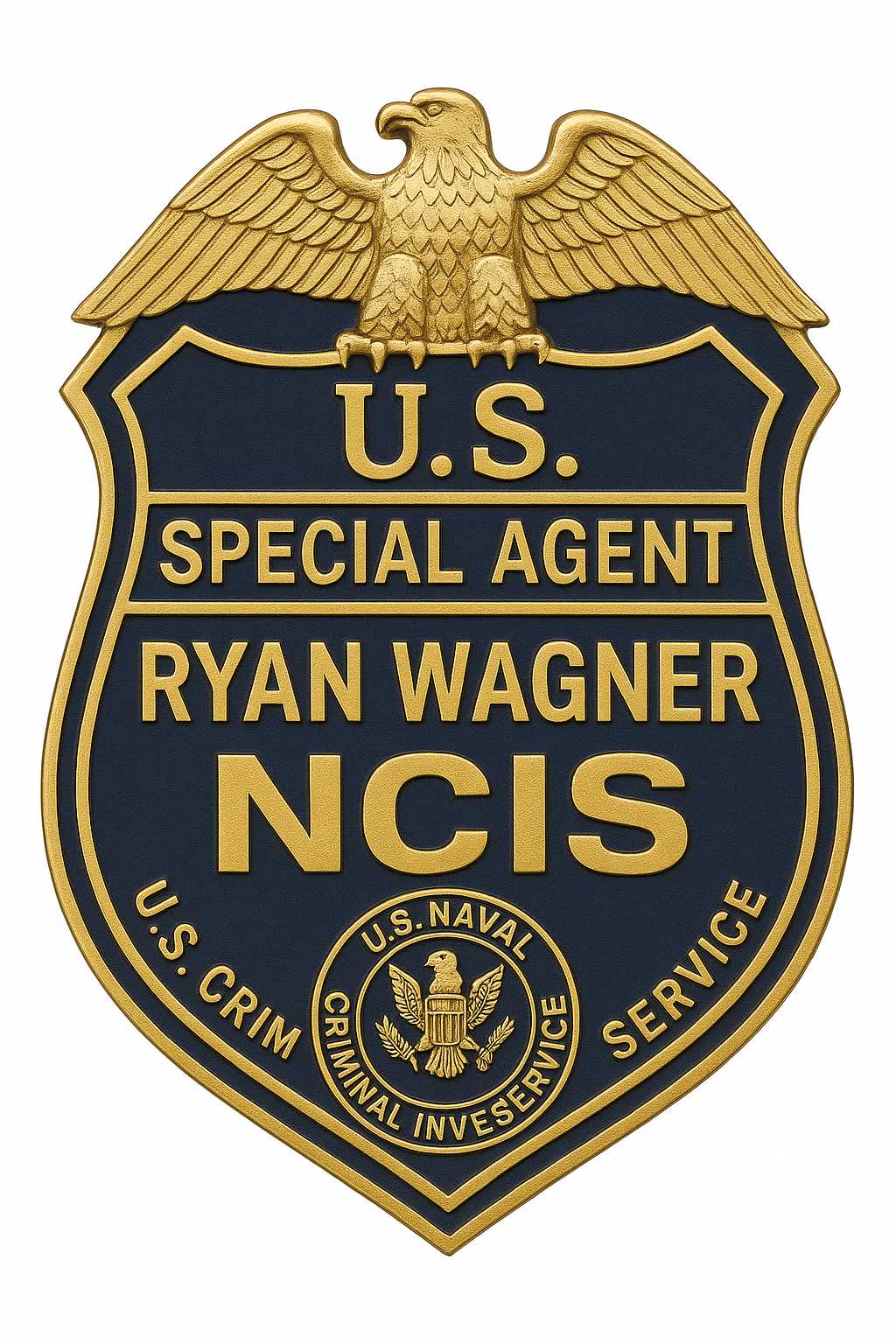 Ryan Wagner